Version 1.0; July 1, 2024
Company Background
Company profile
Skylo Technologies is a global NTN service provider based in Mountain View, CA, offering a service that allows smartphone and IoT cellular devices to connect directly over existing satellites. Skylo’s direct-to-device service is now live across four continents, with more than50 million km2 of coverage, in partnership with multiple satellite operators, mobile network operators (MNOs), Tier-1 chipset makers, and OEMs. Devices connected over satellite are managed and served by Skylo's commercial NTN vRAN, featuring a 3GPP standards-based cloud-native base station and core. Skylo works with existing satellite operators, network operators, and device makers to provide subscribers an anywhere, anytime connectivity solution that seamlessly roams between terrestrial and satellite networks. Skylo's focus is on enabling connected services for people outdoors and connected workflows across three main verticals: Industrial IoT, automotive, and mass-market consumer devices.
Skylo partners with existing satellite operators to orchestrate and unify multiple different satellites and spectrum with its technology allowing users to have optionality from space. Skylo’s RAN is installed into the existing satellite Earth stations that allow for immediate service, without the need to launch new satellites, and is compatible with future MEO and LEO constellations. Skylo is able to offer this service through its robust technological breakthroughs, which includes almost 90 patents. Our network service includes standards-based RAN, CORE, and satellite connectivity all anchored by an enhanced user experience.
Global Presence
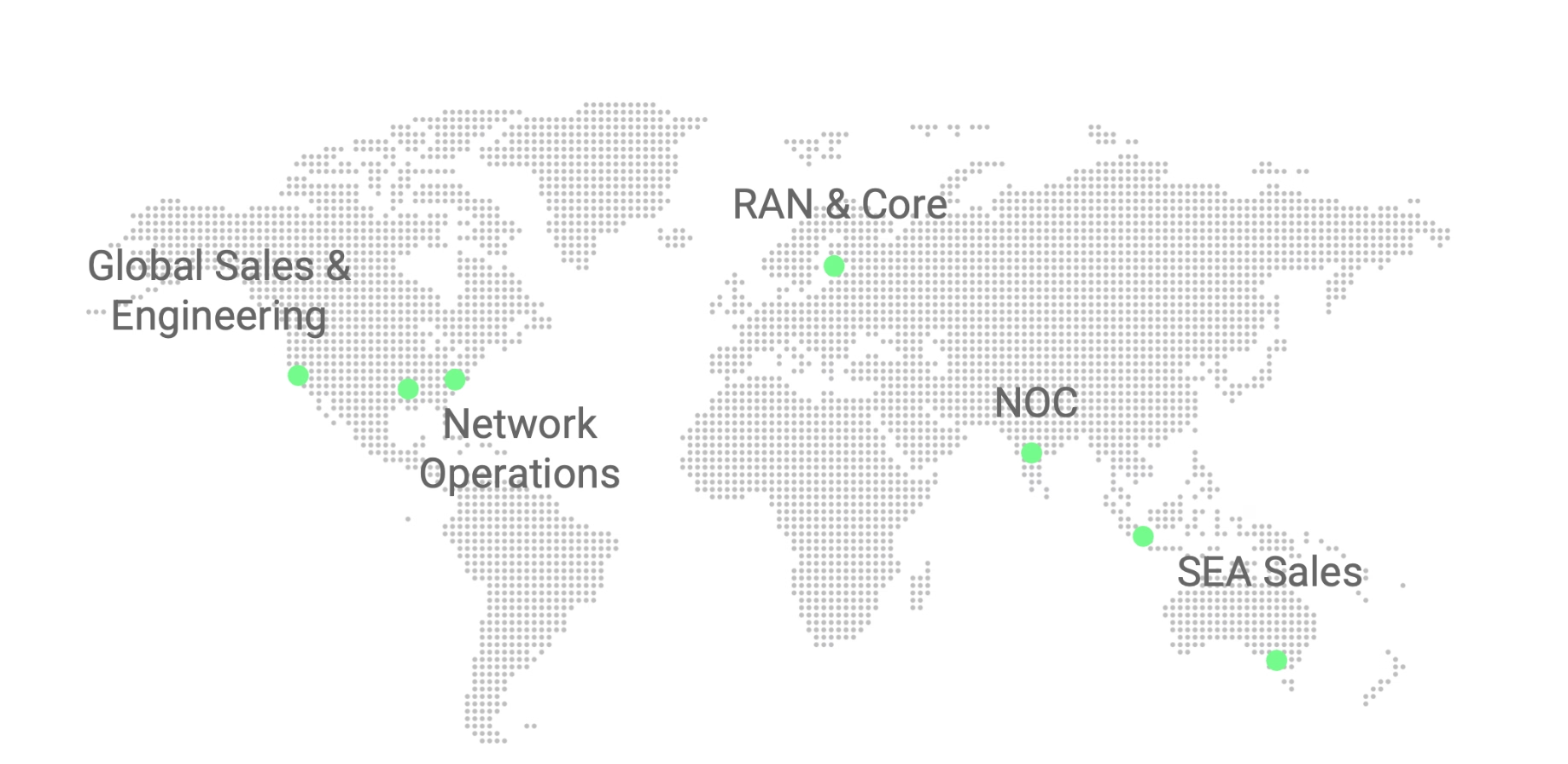
Skylo has an experienced management team that has focused on direct to device NTN connectivity for more than 6 years. This seasoned team has backgrounds with NASA, Stanford University, Cisco, Qualcomm, Motorola and Google. We are highly engineering driven, with more than 60% of the organization focused on all aspects of network engineering and support. Additionally, there is a 24x7 Network Operations Center, used to provide customer support and ensure network stability and performance. Skylo has three offices as part of our global footprint. Our global headquarters is in Mountain View, California, USA. We have a dedicated software development team based in Bangalore, India, and our RAN & Core development team in Espoo, Finland. Additionally, there are a host of remote offices where we house extended members of the Skylo Team.
Capabilities
Skylo is a full stack network operator
Skylo has successfully built and scaled capabilities across the following functional areas, in creating its end-to-end ‘direct-to-device’ connectivity service:
- NTN RAN and compatible Network Core, capable to serve millions of users and more
- Methodologies to make NTN connections more robust, above and beyond the standards
- Satellite partnerships – Viasat/Inmarsat, EchoStar, etc.
- Satellite Ground Station installations of our RAN and maintenance thereof
- SIM management and provisioning system
- Data mobility platform & APIs
- Carrier-grade BSS / OSS systems to operate the NTN service, with network observability tools
- Billing system and customer reporting with standard CDRs for traceability and reconciliation
- Globally distributed NOC to maintain high network availability and supporting customers
- Customer support for all our customers, including Tier 2 and Tier 3 support
- Regulatory function securing all necessary licenses and fulfilling all compliance (including PII/GDPR), regulatory, and tax requirements in 23 countries and counting
- Interconnects with SOS services
- Interconnects with SMS services via industry standard APIs
- Chipset and device certification standards and procedures
- Other tools, features and procedures to run a highly available, scaleable carrier-grade NTN service
Coverage
Skylo’s service is currently live across four continents, covering ~10% of the planet commercially, serviced by over 200 individual satellite beams, across 7 satellites (GEO), and 9 Earth stations carrying Skylo’s network stack. Coverage is expanding in phases, as a function of regulatory approvals and customer requirements, towards global coverage in 2025. With Skylo’s current installations, we have access to global coverage, with the ability to instantaneously turn on a new geography.
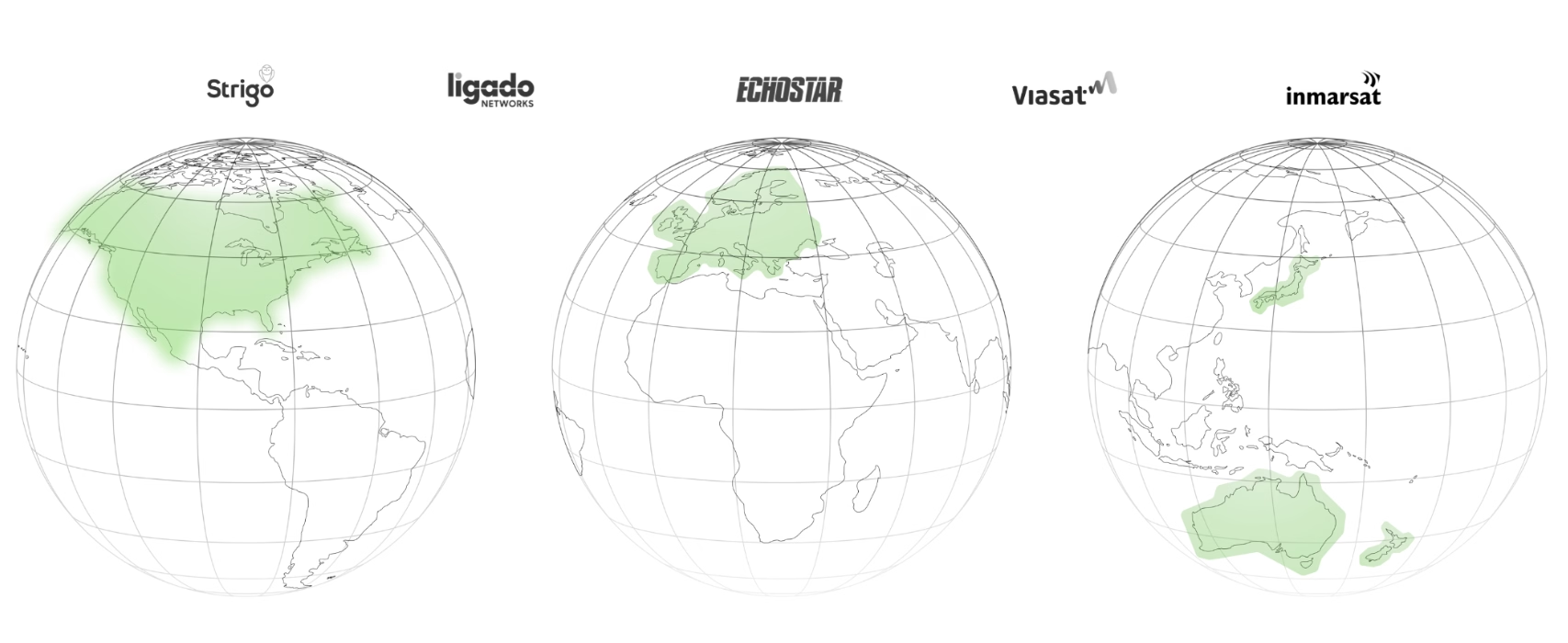
Skylo partners with existing and upcoming satellite operators across all orbits (GEO, LEO, MEO), to provide coverage. Skylo leverages ‘bent pipe’ satellite architectures, but is also compatible with other architectures.
Services
Overall, Skylo currently provides narrowband data mobility service over NTN. The service can be described as having the following characteristics:
- Standards-based Non Terrestrial Network (NTN) service, for ubiquitous connectivity
- Support of both IP and Non-IP (NIDD) Routed Traffic
- Chipset and Device Certication, validation on Skylo’s satellite Network
- NTN connectivity without any special hardware or change in user behavior, such as having to physically point devices to the satellite
- CDR integrations with MNO billing systems for a single billing solution for the end subscribers
- Supports all real-time applications, such as 2-way messaging with delivery notification and read receipts, SOS, alarms, emergency notifications, sensor data, with 5-15s latency
- 3GPP Network Core and standard interfaces for integration
- Seamless integration with terrestrial MNOs to provide hybrid NTN and Terrestrial connectivity including handoffs / switching
- Skylo provides secure APIs for SIM Management and Provisioning
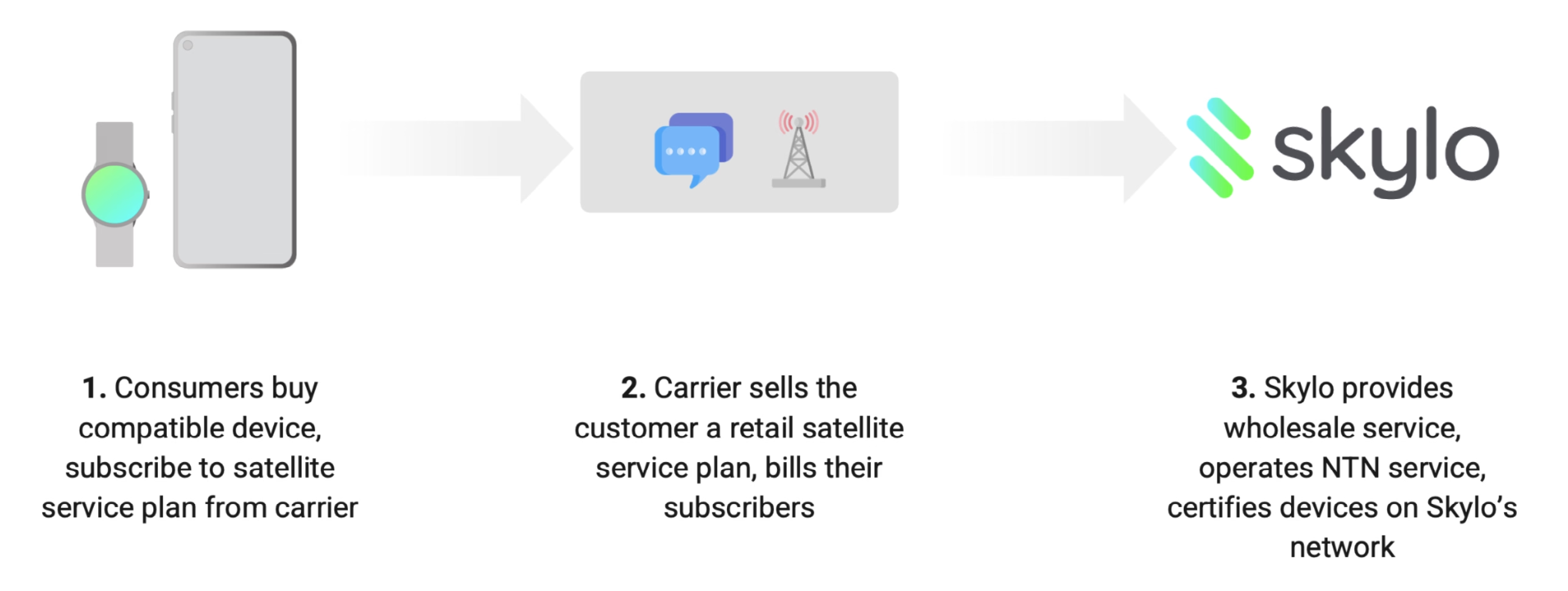
- Since Skylo extends its network as a roaming partner to terrestrial MNOs, subscribers receive a single data plan and bill from their existing provider which includes both cellular and satellite connectivity on the same devices
The technical parameters of the service are as follows:
- 3GPP Rel 17-NTN
- MTU - 256 Bytes, (50 byte minimum billable)
- Latency (50 Byte Packet): ~5 - 15 seconds
- Control-Plane operation
- Full Duplex
- 2 messages per minute per devices
- Real time, two-way messaging, periodic reporting, alerts, paging
- Optimized for low-bandwidth sensor and machine data
- Option for local authentication and breakout
- Option for home network authentication and routing
- IP (UDP) and NIDD
- Enhanced Skylo API for Non-IP application delivery
- eDRX, PSM modes enabled
- 24/7 NOC
There are multiple manifestations of this service, which Skylo operates, as described in the following sections.
SOS Service
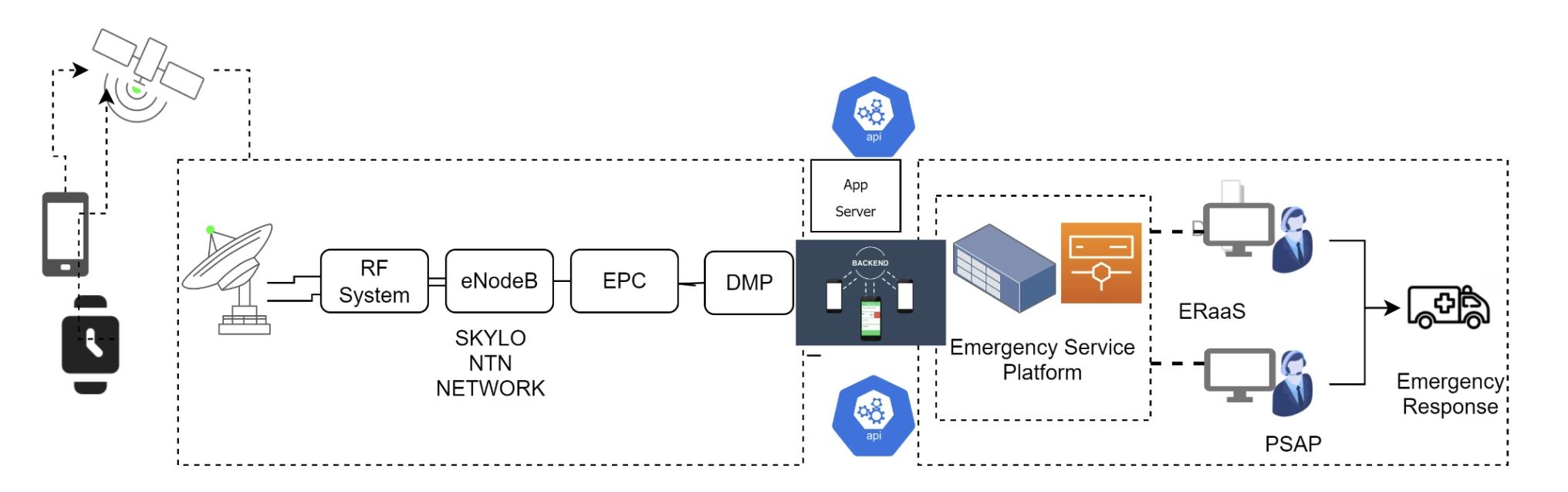
Skylo has currently partnered with two different SOS response/Emergency Response as a Service (ERaaS) vendors. Both offer global emergency response solutions for consumers. These companies work with local PSAPs and private organizations in order to provide dedicated search and rescue operations. Working across both cellular and satellite networks, the user is always within an umbrella of safety. Skylo can oer direct API integration into multiple ERaaS providers in order to provide users the certainty that they will always be covered in the event of an emergency. In October of last year, as an example, Skylo successfully worked with our ERaaS partner to save a hiker’s life while in the Colorado mountains, showing the value of ERaaS integrations.
Carrier-native SMS
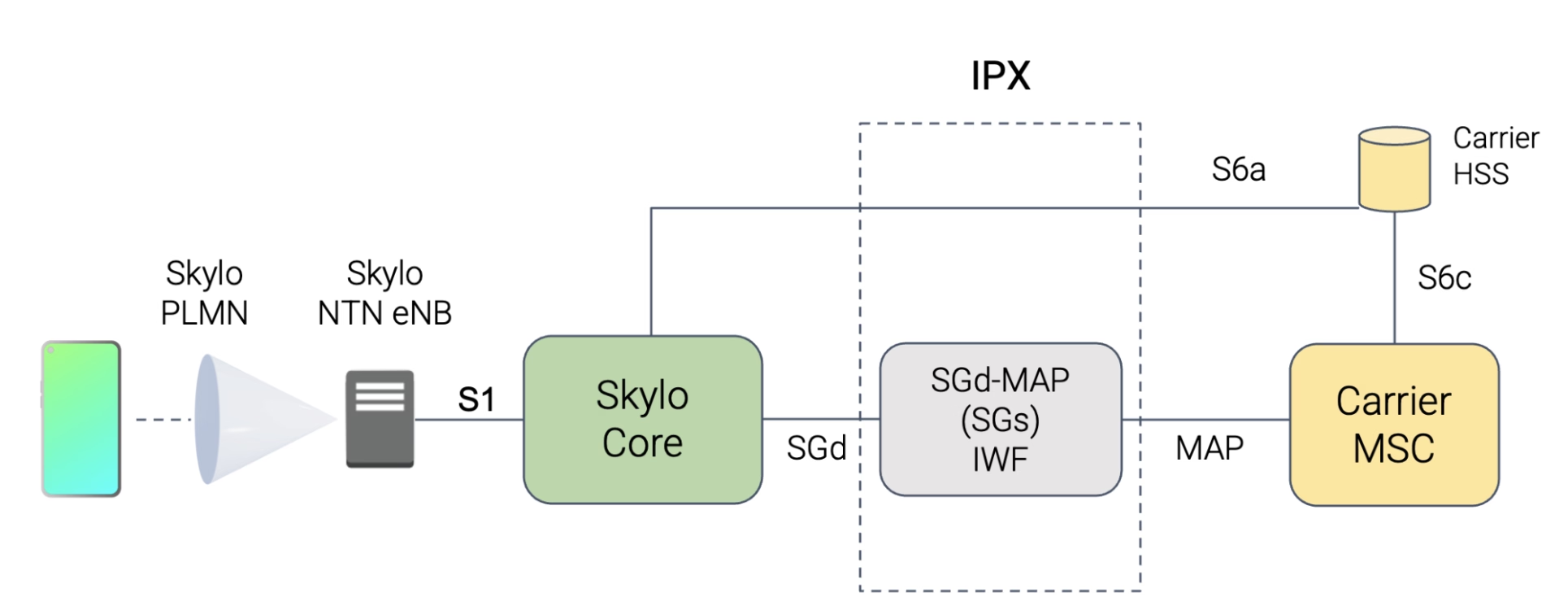
Skylo supports carrier-native SMS services as provided by terrestrial mobile network operators, directly over satellite to/from compatible Android smartphones. Skylo leverages its existing interconnections with MNOs for the purposes of SMS delivery. Integrations are performed and managed on a per MNO basis, and involves the use of IPX services to ease rapid and large scale deployments (standard roaming interface). Today, Skylo works with two of the world’s most prevalent IPX services to interconnect with multiple different MNOs and MVNOs. Skylo currently supports SGd and SGd to MAP interworking functions to enable broad compatibility with MNOs. Authentication occurs with the MNO SIM and is routed to the MNO partner HSS/MME via the S6a interface. The device (UE) uses the partner carrier’s MSISDN as source MSISDN, when initiating an SMS, after which SMS-o-NAS messages are exchanged directly between Skylo’s Core and the Carrier’s SMSC/MSC via SGs. Mobile originated (MO) and mobile terminated (MT) SMSs are exchanged between the source and various destinations via the partner carrier’s SMSC. The network topology for this service is shown in the below figure.
Non-IP Data Delivery (NIDD) Service
Skylo supports Non-IP Data Delivery (NIDD) with control plane optimizations. The NIDD services support both SOS as well as other generic narrowband data services. The high level topology is shown in the gure below. The data path sees data going through the RAN to the core network, to Skylo Data Mobility Platform (DMP), which is a REST API for customers to perform the following:
- Securely manage the ingress, egress, and control of NIDD trac over the Skylo network
- Register webhooks for NIDD egress data
- Manage and monitor control information about data ingress / egress requests
- Provide high level network health status check information
- Perform throling and load balancing
A representative view of the DMP is shown below.

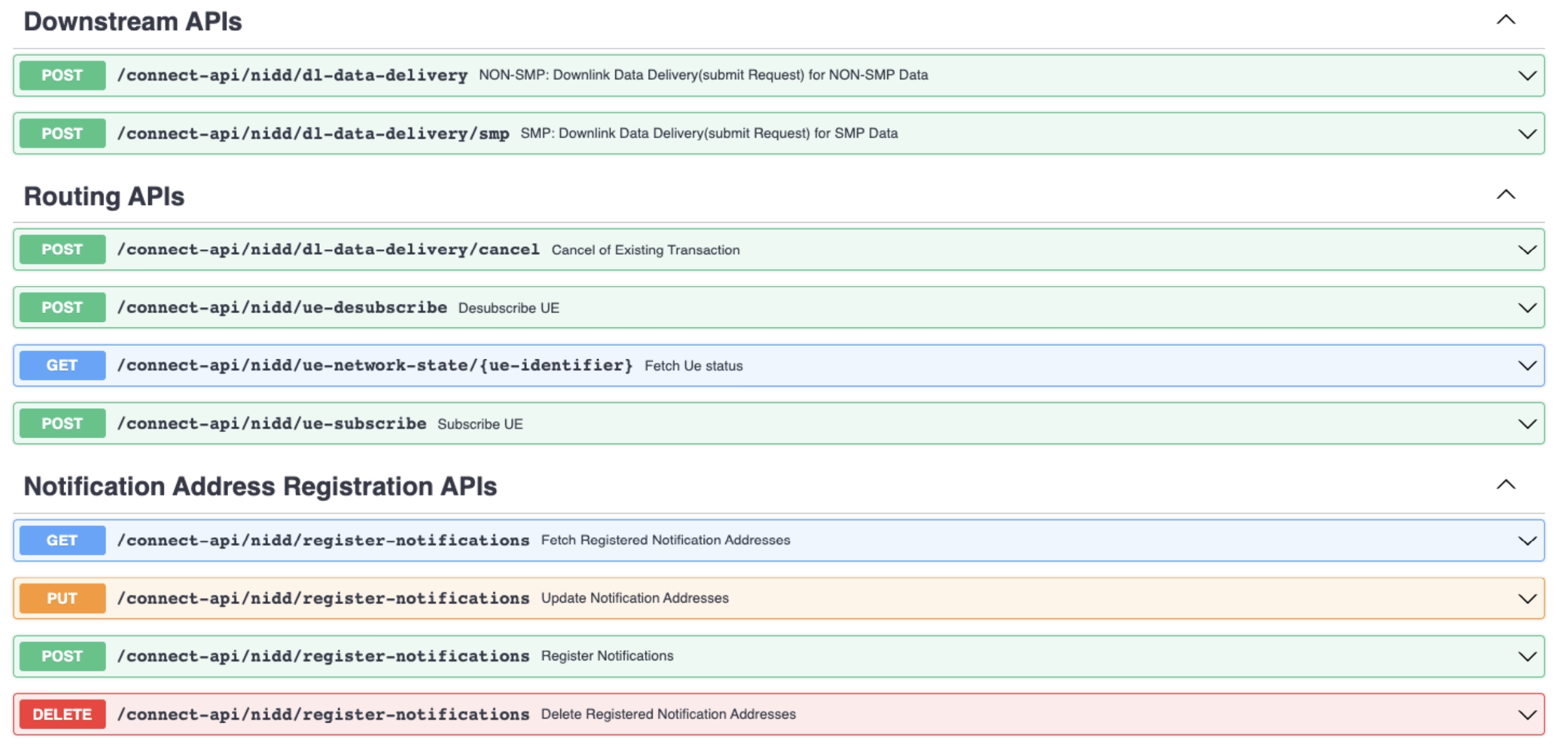
The DMP API supports:
- Registration of Notifications - Used for NIDD uplink Data Notications, Downlink Data Delivery Notifications, and UE Network Event Notications.
- Downlink Data Submissions - Used for both SMP and Non SMP mobile terminating data packets.
- Fetch UE Network Status - Return the network status of the UE.
- And more...
Skylo has successfully commercialized its NIDD service, enabling 3rd parties to market over-the-top messaging applications such as Bullitt(shown below). Additionally, Skylo’s SOS service also takes advantage of the NIDD data path.

IP Data Service (3rd Party Applications, Web & IoT)
Skylo operates IP data services with option for local breakout or home routing to partner MNOs. This facilitates IP-based services, such as applications on smartphones (such as location sharing, or payments), and also IoT devices and sensors that require IP data services.
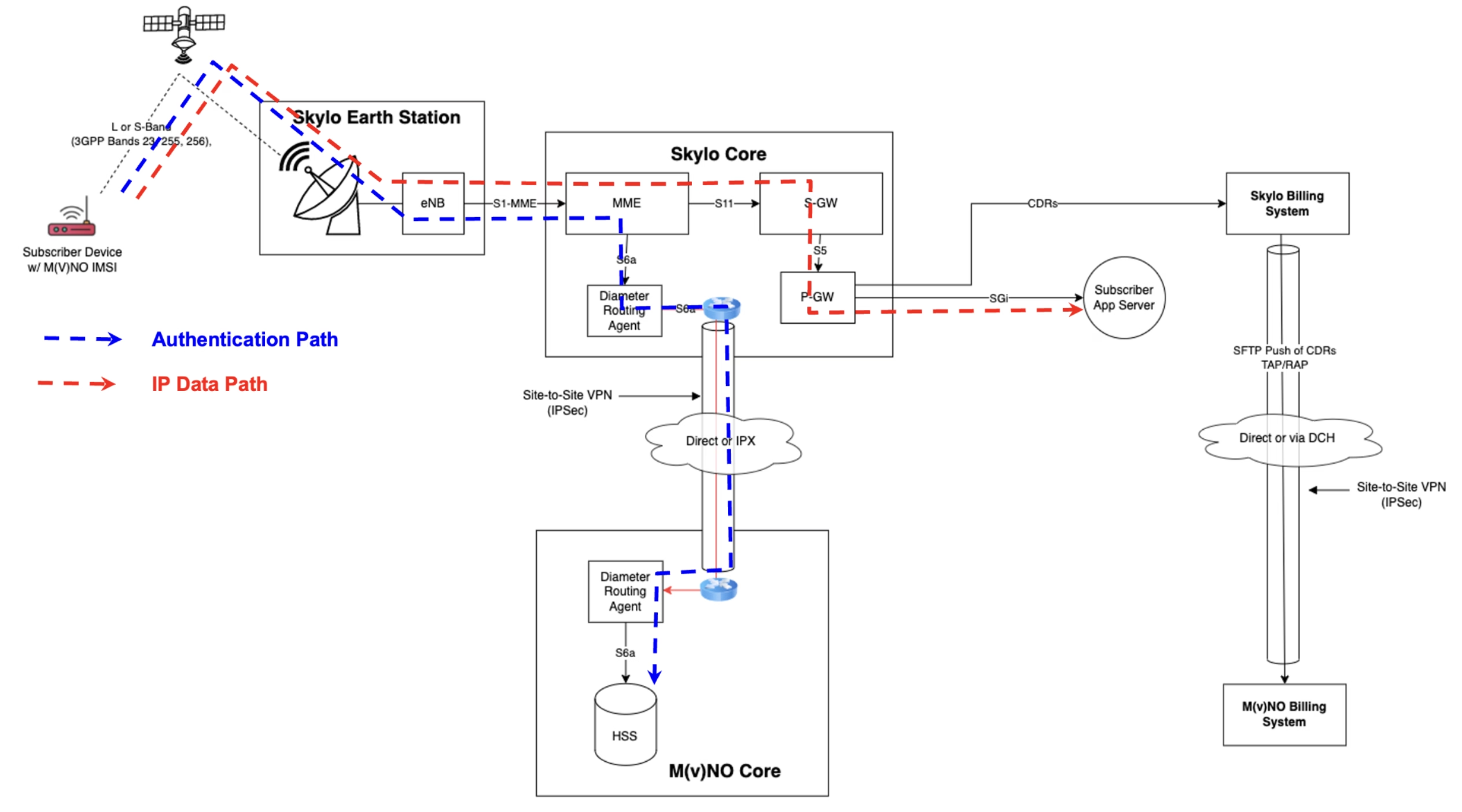
The following diagram describes the IP data path. The device begins sending IP data (UL Data) to the Skylo network which forwards the trac to the End-User (MNO/MVNO customer) application server via the S8 interface to MNO/MVNO’s P-GW. The reverse path is used for data from the application server to the device (DL data).
Market Segments
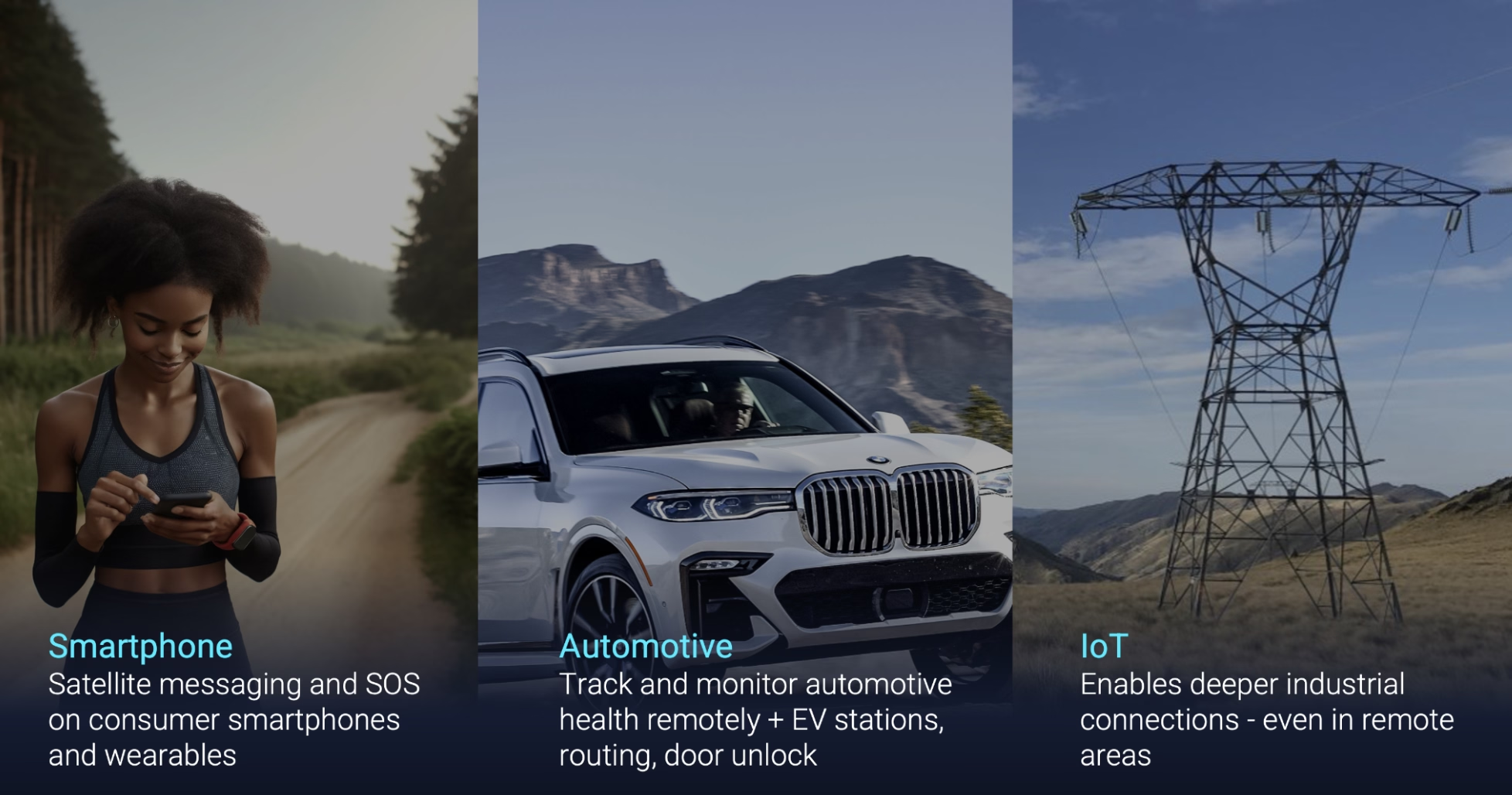
Skylo provides ‘direct-to-device’ connectivity across three segments: smartphones & wearables (consumer devices), automotive, and IoT.
Skylo’s business model is largely the same in all three cases – providing a wholesale service via the carriers. The overall commercial model ow is shown below:
Smartphone
Skylo has certified the most popular 5G cellular modems to be compatible with its non-terrestrial network on a D2D basis. This includes:
- Qualcomm Snapdragon (X80, Gen 4)
- Samsung Exynos (5400)
- MediaTek (MT6825)
With the availability of these chipsets, most major (Android) smartphones coming into the market will be compatible to connect over Skylo’s network, subject to being certified by Skylo. Smartphones that have already been certified by Skylo include the CATS75, and the Ulefone Armor 23 Ultra.
Automotive
Skylo is in the process of certifying the most popular automotive chipsets, and is targeting the global launch of data and voice services for cars. Skylo is currently working in partnership with Qualcomm Automotive, together with automotive connectivity companies such as Cubic Telecom for global NTN service. Voice calls over Skylo for automotive have successfully been demonstrated.
IoT
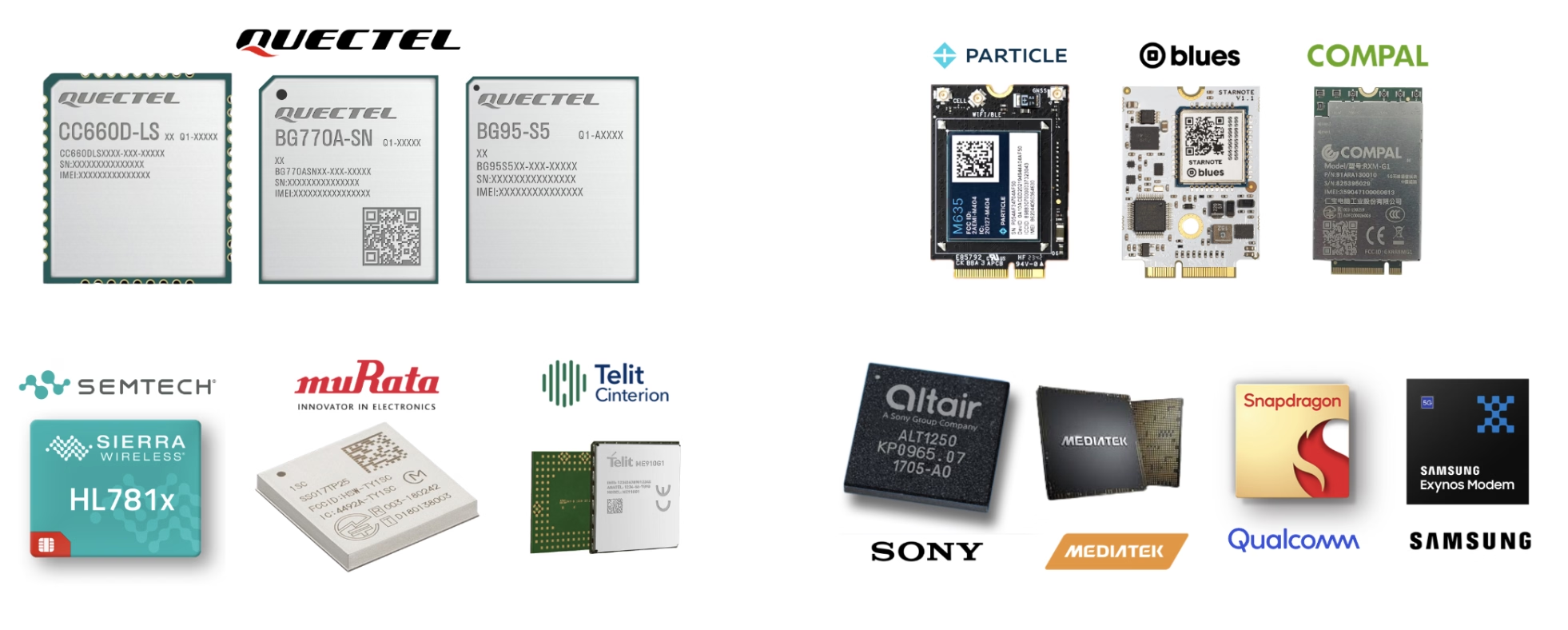
Skylo serves a vast majority of the IoT market through carriers and module makers. Skylo has successfully partnered with and certified the world’s most popular IoT chipsets and modules, including:
- Quectel – CC660D-LS, BG770A-SN, BG95-S5
- Murata – 1SC
- Semtech – Sierra Wireless HL781x
- Telit – ME910G1
- Particle – Muon, M-SOM
- Blues – Starnote
- Compal – RXM-T1
- Qualcomm – 9205S, 212S
- Sony/Altair – ALT1250
Technology Overview & Innovation
As a network service provider Skylo acts identically to that of existing carriers or MNOs and operates the exact same set of infrastructure and programs such as:
- RAN, Core, and Cloud data mobility elements
- SIM Management, Billing, and other OSS/BSS elements
- 24x7 network operations center
- Device, module, and chipset certication programs
- Regulatory compliance
- MNO roaming integrations
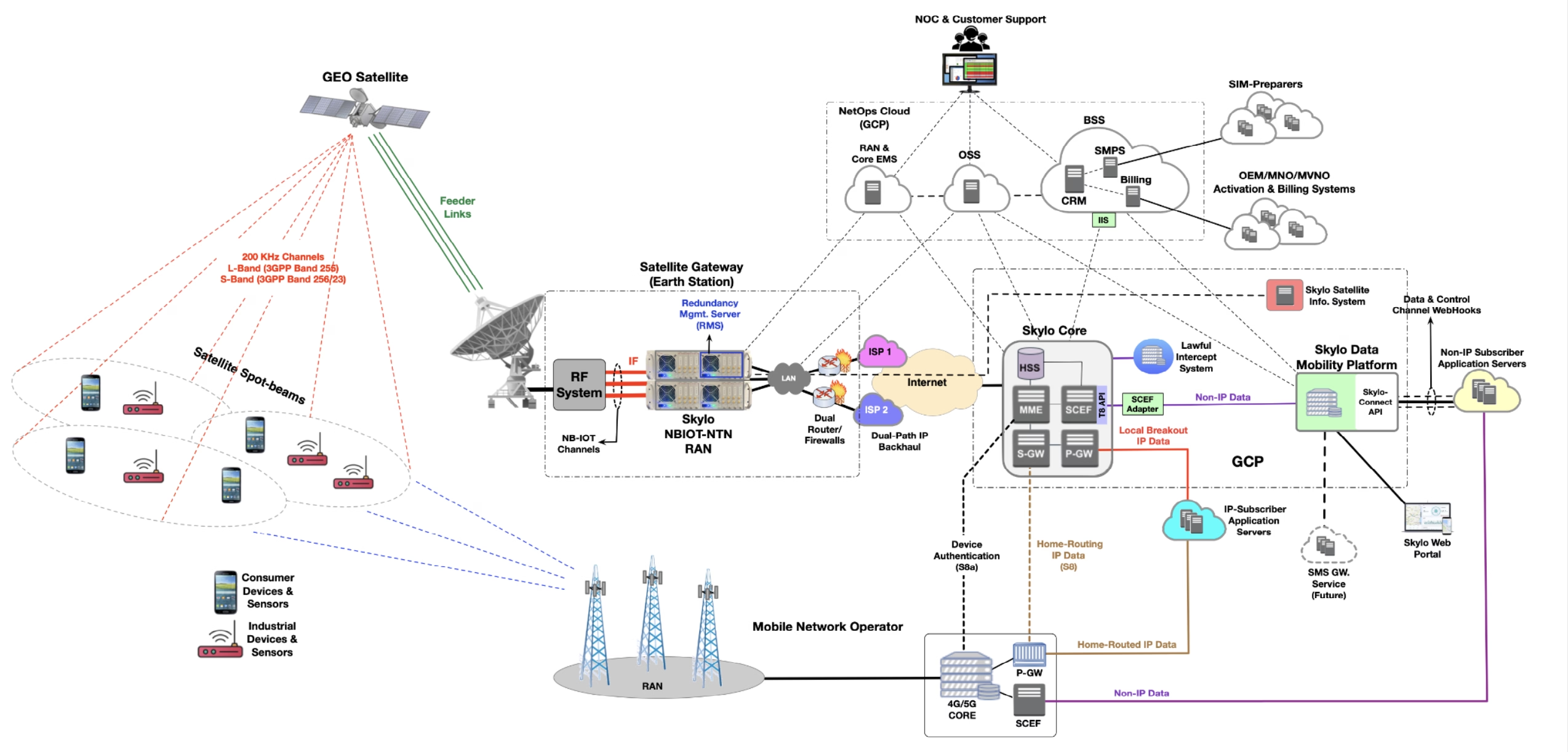
An overview of Skylo’s network architecture is shown in the below gures:
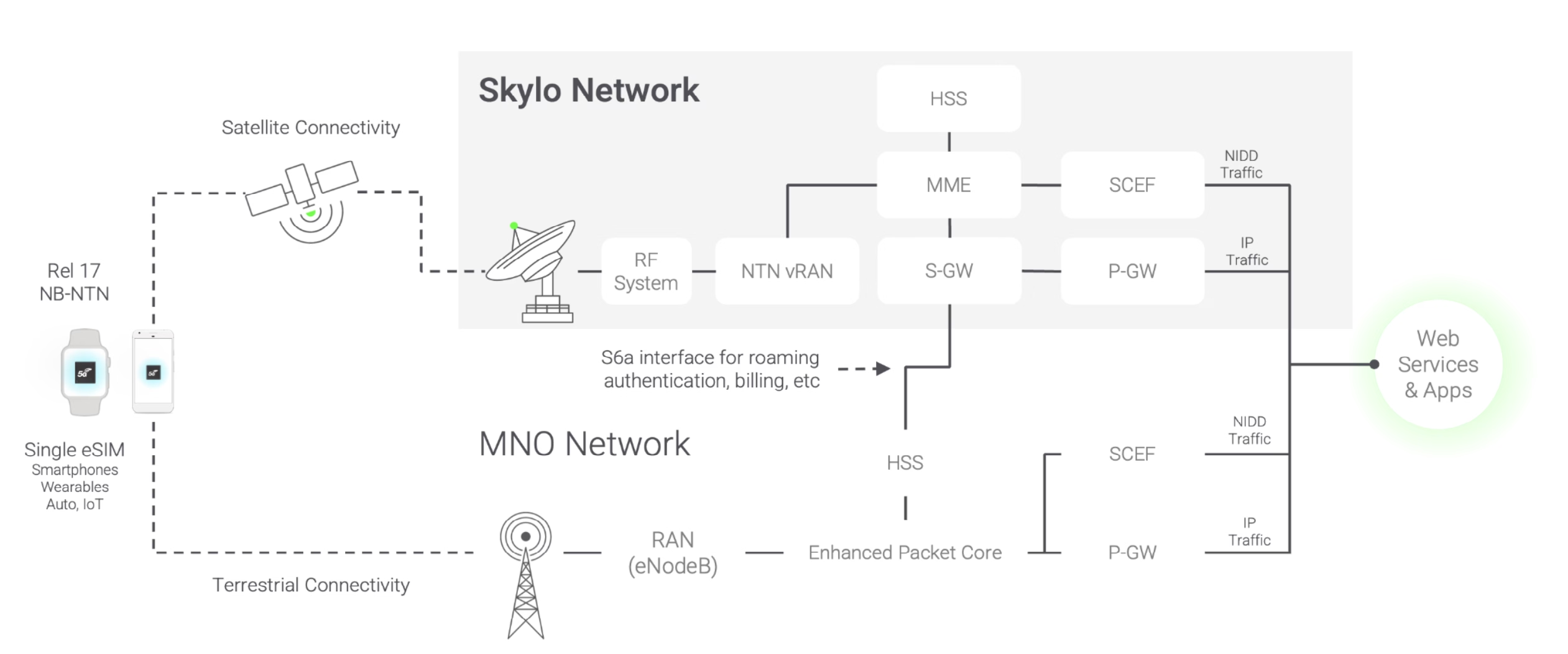
Skylo’s network supports interoperability with all carriers, with options for local breakout and home routing, as well as support for both IP and non-IP (NIDD) traffic over Band 23, Band 255, and Band 256 network deployments.
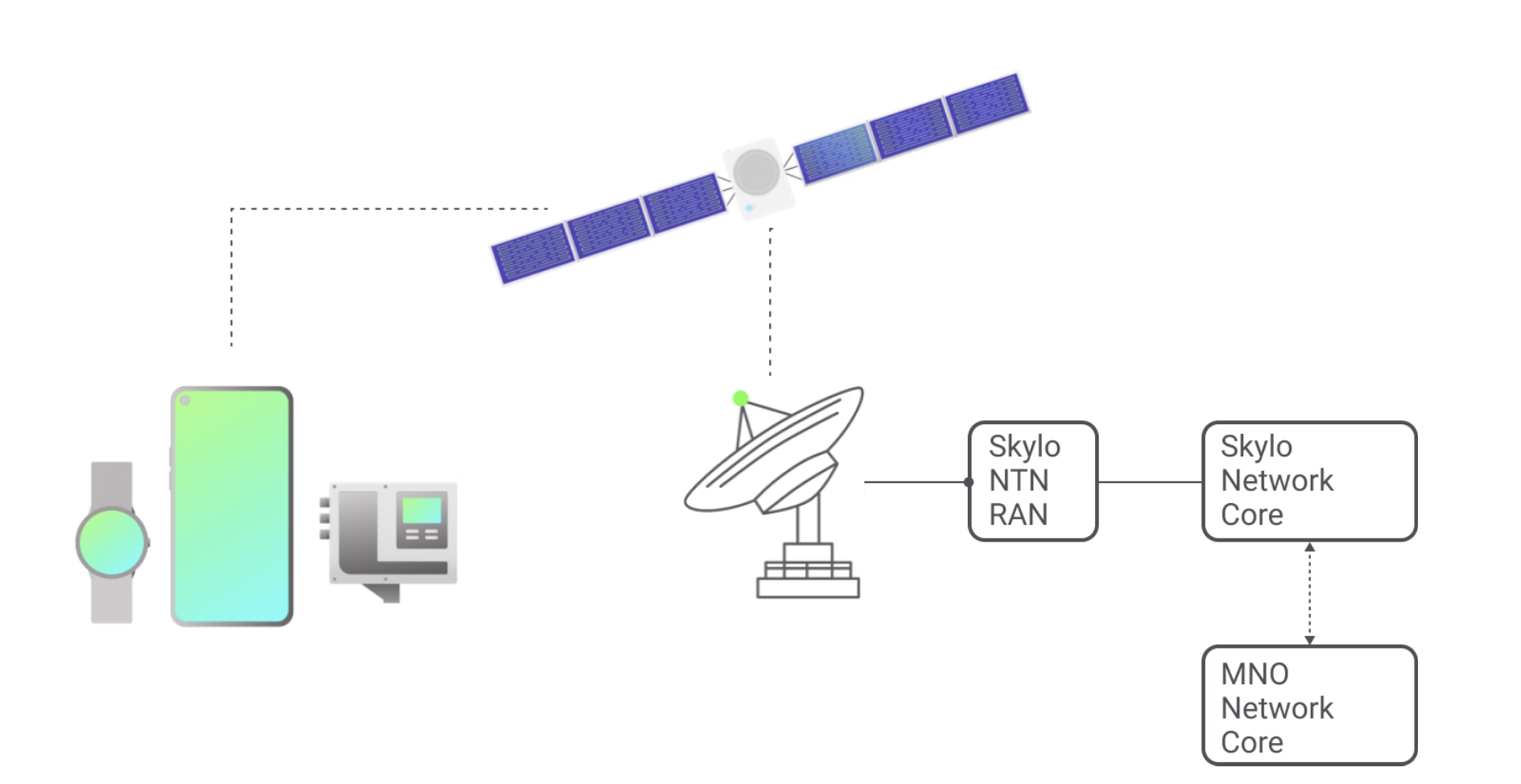
Skylo does not build or operate the satellite infrastructure, but rather, works in partnership with satellite operators who provide Skylo with dedicated access to their spectrum, access to power on their satellite, and facilities in their Earth stations. Skylo installs its virtualized RAN infrastructure into these Earth Stations, which allows us to manage traffic and the connections from the end user devices. Skylo currently works with operators in GEO for various reasons, but the technology and architecture is agnostic to either GEO or LEO. Skylo has launched and started operations of its commercial NTN service across Europe and the US, and is expanding to cover additional satellite operators, geographies, chipsets, and devices.
Skylo operates a commercial non-terrestrial R-17 NB-IoT network today across the globe. Skylo operates the network as one singular network with a single Skylo PLMN ID and single set of customer touch points, but orchestrates multiple different satellite and spectrum assets to support the network. Today Skylo has homologated the satellite and spectrum infrastructure of Echostar, Viasat, Strigo, and Ligado assets to create a robust and diversified infrastructure base for the network, with many regions having cross supplier satellite redundancy. The network currently operates across 7 different geostationary satellites and is hosted out of 9 different satellite earth stations enabling a global coverage capability. The network is currently operating in North America, Europe, Australia, New Zealand, and Asia, covering more than 50M km2 with new deployments continuously ongoing as customer demand calls for increased coverage areas.
Delivery of network services over satellite is a challenging and rapidly evolving field. To appropriately address the intrinsic challenges present in the eld and to buttress Skylo’s role as a network operator, Skylo also functions as a technology developer. Skylo develops many pieces of technology in-house such as NB-IoT NTN base stations, ephemeris management systems, data mobility systems and others. This capability allows Skylo to build more scalable, more efficient, and more capable networks to address the demands of the market and the intrinsic challenges associated with eliminating the gap in user experience between satellite and terrestrial connectivity experiences.
As a technology developer, Skylo has enabled a core set of capabilities to enable 3GPP standards compliant services and additionally a set of “Standards Plus” capabilities to offer enhanced services to our customers above and beyond the standard. One example of a Standards Plus capability is a RAN feature to support traffic steering, efficient data mobilization, and message prioritization to handle large scale emergency service events where large traffic impulse functions are present on the network. To enable these capabilities, Skylo both develops them within our own infrastructure, but then also works closely with our chipset partners to enable them. Skylo has 90+ patent filings around the globe on key NTN-enabling technologies.
Skylo operates today a R-17 NB-IoT network, with a strong focus on NIDD services, enhancements for capacity and ow reduction such as CP-EDT, and many other RAN enhancements in the same spirit as the proposed network. Skylo operates a standard 3GPP core which has roaming integrations with other MNOs and IPXs. The network is equipped with cloud platforms to support interfacing with NIDD services, platforms to perform SIM management by customers, APIs to support network health reporting, billing systems, applications to interface with satellite systems, lawful intercept systems, and the full gamut of requested services. The existing Skylo network topology is shown in the Figure below for reference.
RAN Development
Skylo plays a dual role as a network operator, and as a technology developer. Within the role of technology development, Skylo builds in-house many of the technologies used within the network to help Skylo’s service meet the highest performance standards, oer the best innovative features, and generally solve the novel problems posed by operating a 3GPP network within a satellite context. Skylo produces elements such as eNodeBs, SIM management systems, NIDD cloud platforms, core network elements, and many other pieces. Specifically, Skylo produces its own Rel 17+ NB-IoT eNodeB.
As a RAN technology developer, Skylo works closely with all of the major chipset manufacturers to design, develop, and perform interoperability testing between base stations and chipsets. In this role Skylo has not only developed a R17 compliant system, but has also built signicant standards+ functionality on top of R17 in cooperation with Skylo’s chipset partners.
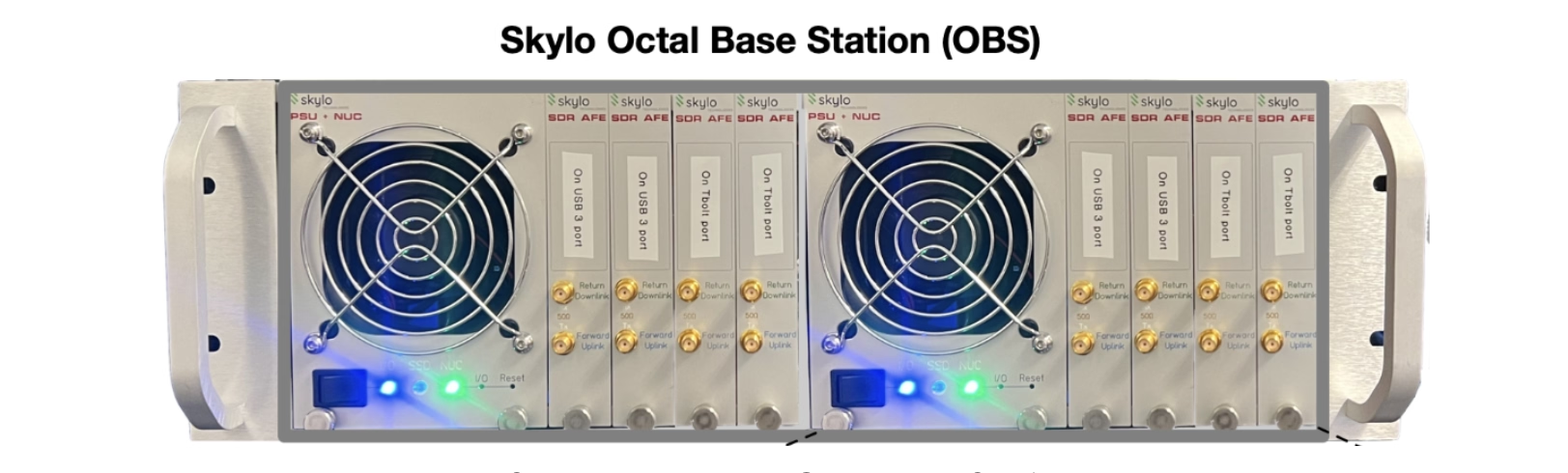
Skylo has produced incremental functionality in the RAN and in partnership with chipsets such as:
- New band definitions
- Network roaming functionality
- Multicast/Broadcast functionality
- Dynamic satellite power management
- Reduced data signaling flows
- Network performance and capacity enhancements
- Voice Services
- Class of Service
- Custom frequency deployment congurations
- Etc.
Skylo has, and will continue to innovate in the RAN technology segment beyond Rel-17 to advance and incorporate Rel-18, Rel-19, and eventually 6G technologies.
Certification Program
Skylo has built an expansive NTN certification infrastructure to certify chipsets, modules, and devices onto the Skylo network. Skylo’s certification program represents the confluence of regulatory requirements, 3GPP performance standards, Skylo network performance standards, and bespoke Skylo NTN specific features to ensure a robust and highly performing network experience.
Skylo has generated a tiered conformance matrix, test plans, and supporting processes for certification of chips, modules, and devices across a range of applications from generic network access to specific usage scenarios such as MNO roaming, SOS use cases, SMS, and other specic NTN services.
The Skylo certification program has seen broad uptake across the ecosystem. Test equipment manufacturers Keysight, Rodhe Schwarz, and Anritsu all have certifed commercial offers of Skylo’s certification test plans on their production equipment which OEMs, MNOs, and test houses use today.
To further the availability of access Skylo has also partnered with and certied multiple test houses to execute Skylo’s certication requirements. Skylo test house partners include Sporton, SGS, Tech Mahindra, and Cetecom. To date Skylo’s certification program has supported most of the major chipset manufacturers including Qualcomm, Sony, Samsung, and MediaTek. It has supported the major module manufacturers such as Quectel, Murata, Telit, Semtech, Compal, and others. Finally supporting multiple end devices, including most relevantly multiple tier 1 consumer smartphone OEMs.
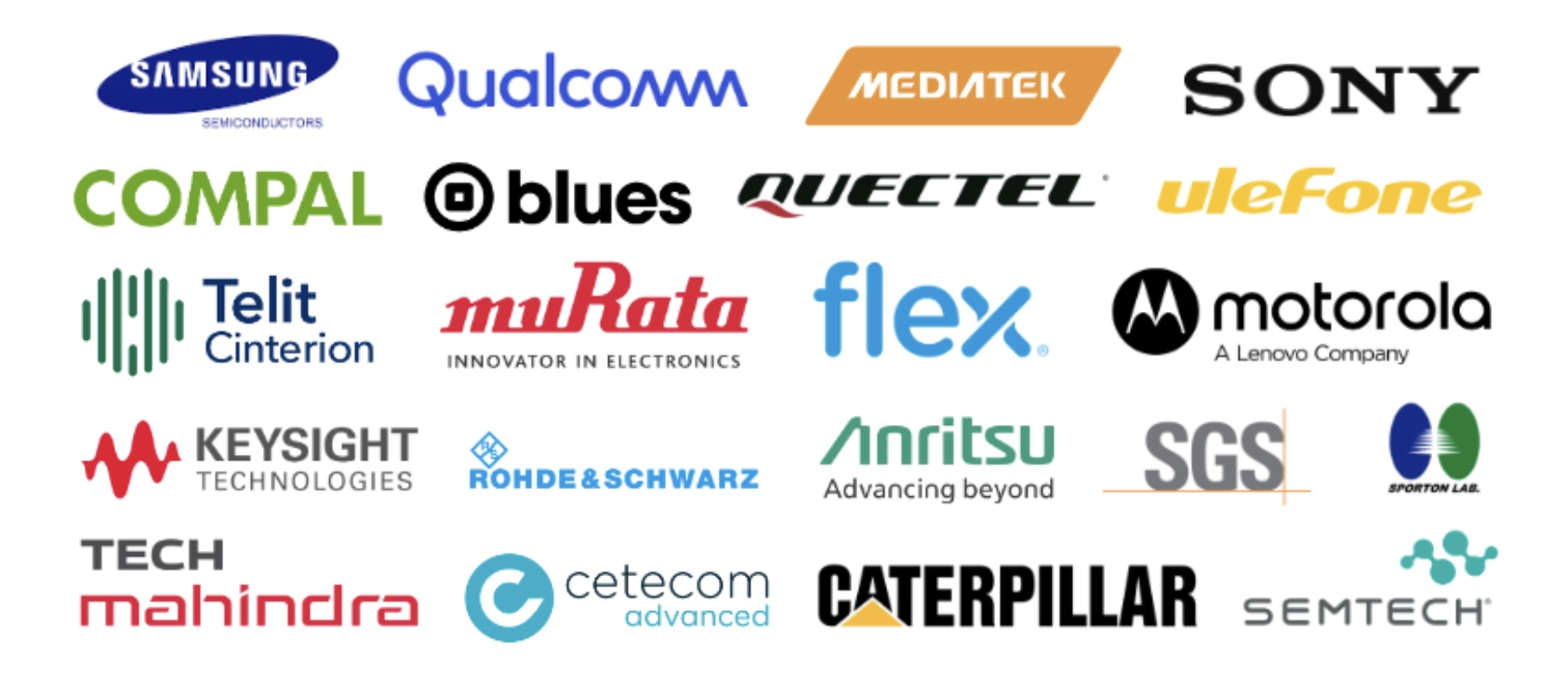
Building this program has created a strong institutional expertise within Skylo for seing and enforcing high performance network standards, managing interworking and certication with MNO carrier partners, and interworking with devices. The caliber of this program is buttressed by the strong industry alignment and support of this program as outlined with all of the supporting parties.
SIM Management & Provisioning
Skylo’s SIM Management and Provisioning System (SMPS) is set of secure APIs which are used to manage eSIM provisioning for Skylo’s OEM customers, in the event they are using a Skylo SIM/profile instead of an MNO’s SIM. Skylo’s SMPS allows for the provisioning of eSIMs/iSIMs for specific APNs and regions of service. The SMPS service also manages the distribution and maintenance of provisioning information across the network elements including HSS. A diagram of the SMPS system is shown below.


Today Skylo has integrations with Thales, NXP, and Kigen as SIM preparer partners.
Privacy & Security Practices
Skylo follows security and privacy by design culture and shift left security approach in our SDLC. Skylo is leveraging NIST CyberSecurity Framework 2.0, NIST Privacy Framework for architecting, managing, monitoring security and privacy operations and compliance.
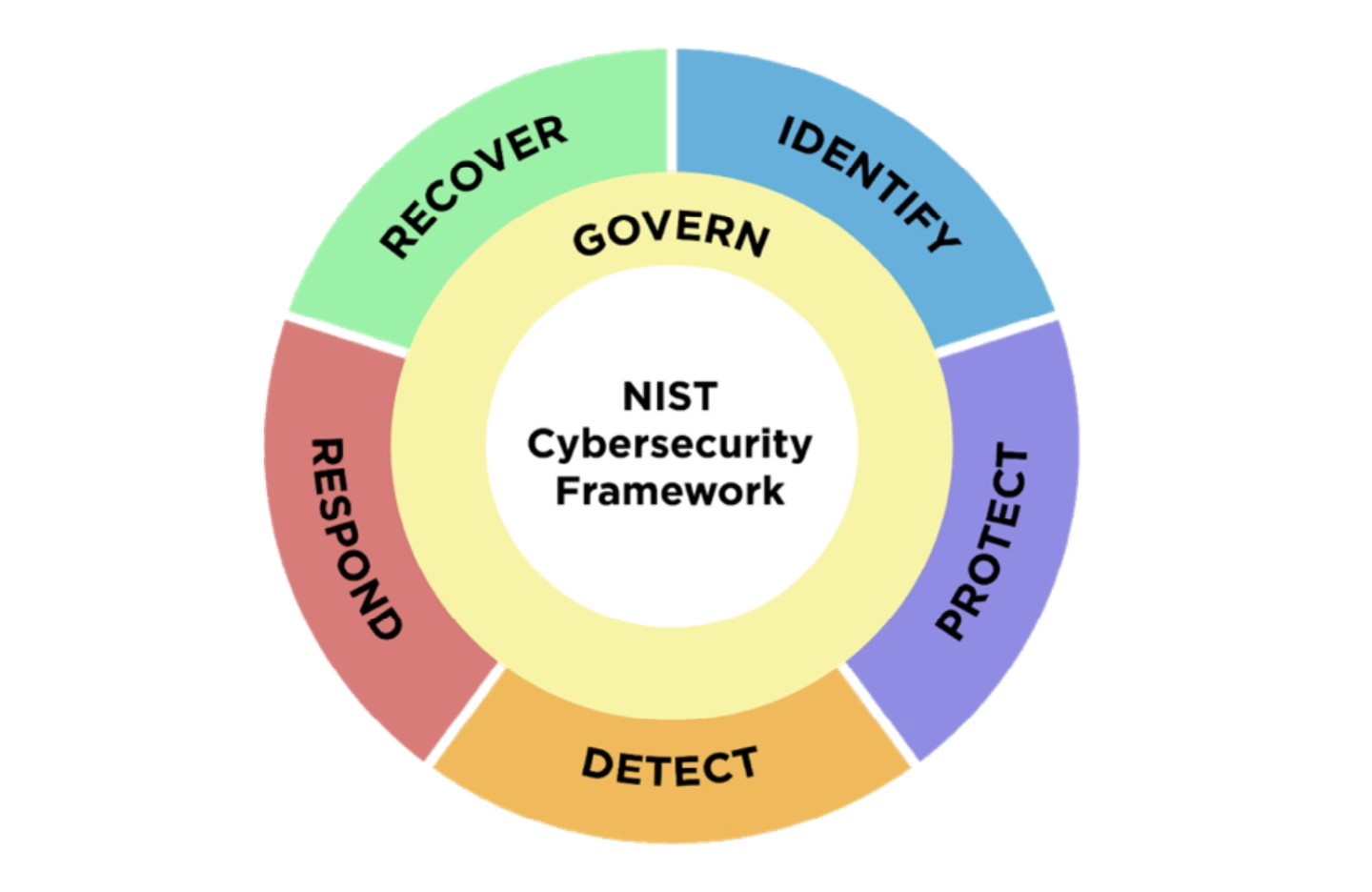
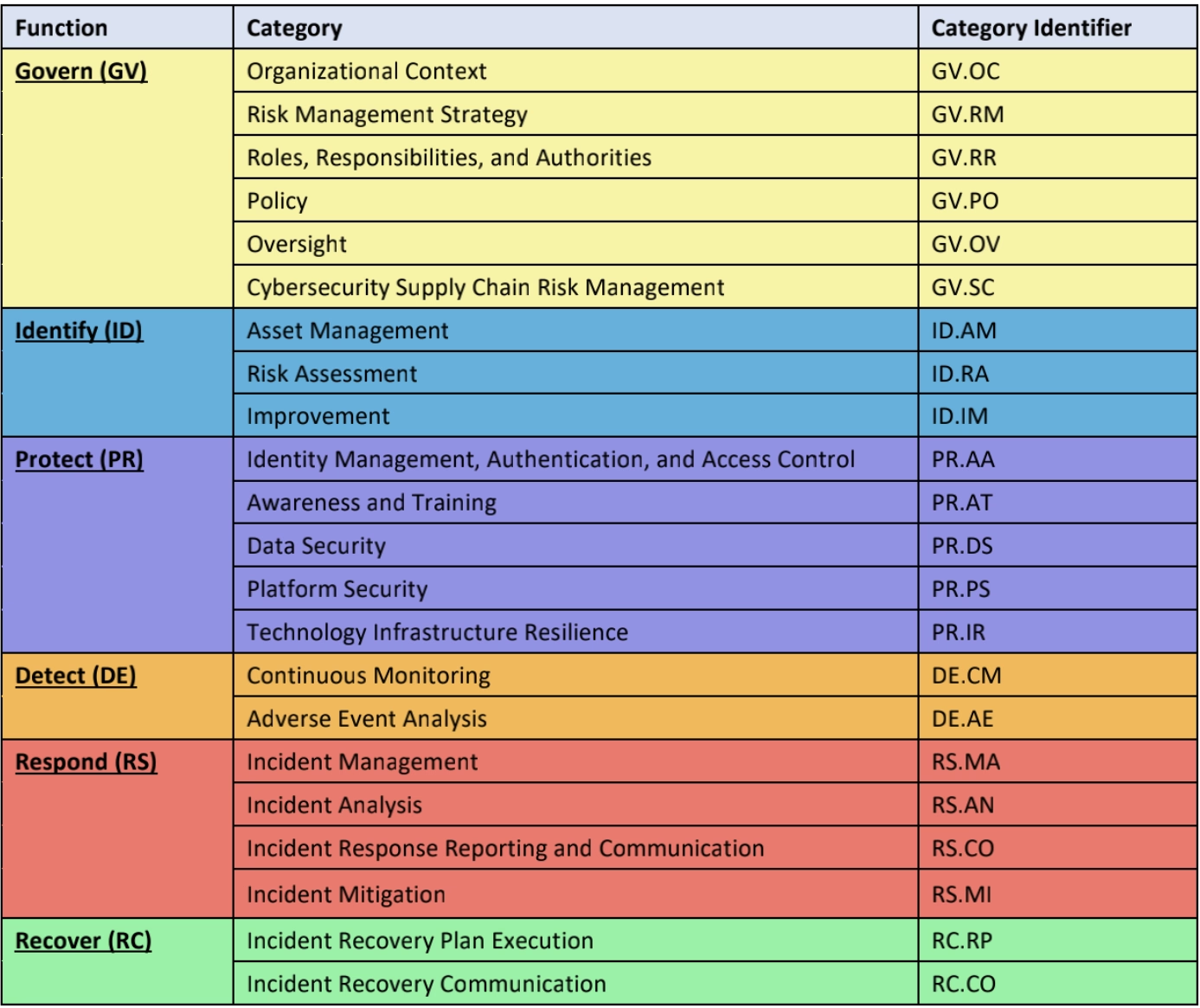
Skylo has been working with external partners, namely, NCC Group (Cyber Security & managed services, consulting rm) along with Innominds Soware Inc. on an yearly basis to uplift the maturity of Skylo’s security posture with respect to the following functions and categories as dened in the NIST Cybersecurity Framework 2.0:
Skylo’s cloud organization maintains a strong security posture for its data and users by adhering to leading, industry-standard best practices like least privileged access and need to know basis through role based and time based access controls. We employ robust measures in encryption for data at rest, data in transit, secure data storage, and error event handling to safeguard our cloud assets and our customers. Our cloud assets are highly scalable and redundant allowing our business a great degree of flexibility to meet business critical demands and throughput.
To ensure secure access, our cloud assets are hosted within private VPC networks configured in Google Cloud Platform. Access to these networks is tightly controlled, even internally, and granted selectively based on approved IAM Roles. We enforce strong internal IT security practices such as multi-factor authentication systems using OKTA, Training & Awareness are managed by simulating phishing exercises followed by training verifications using KnowBe4, and ephemeral access keys for added protection.
We perform a meticulous Business Continuity Plan (BCP) and IT Disaster Recovery (DR) simulation on a periodic basis to ensure business resilience. These measures are designed to validate data transmission continuity without any loss of data and ensuring least impact to business with zero downtime failover.
Glossary
IPX
Telecommunications interconnection model for the exchange of IP based traffic between customers of separate mobile and fixed operators as well as other types of service provider (such as ISP), via IP based Network-to-Network Interface.
PSAP
Also known as 911 Call Centers. a type of call center where the public's telephone calls for first responders (such as police, fire department, or emergency medical services/ambulance) are received and handled.
MNO
Company that provides wireless communication services to its customers. These services include voice and data transfer over a wireless network, which is made up of a network of cell sites spread out across a geographic area.
LEO
Encompasses Earth-centered orbits with an altitude of 1,200 miles (2,000 km) or less. This orbit is considered near enough to Earth for convenient transportation, communication, observation, and resupply. It also is the area where the International Space Station currently orbits and where many proposed future platforms will be located.
OSS/BSS
OSS covers Order Management, Network Inventory Management and Network Operations.BSS primarily consists of order capture, Customer Relationship Management and Telecommunications billing.
NOC
Centralized location where computer, telecommunications, or satellite networks systems are monitored and managed 24x7
3GPP
3GPP specifications cover cellular telecommunications technologies, including radio access, core network and service capabilities, which provide a complete system description for mobile telecommunications.
CORE
Central element of a telecommunications network that offers services to customers who are connected by the access network.
RAN
Major component of a wireless telecommunications system that connects individual devices to other parts of a network through a radio link. The RAN links user equipment, such as a cellphone, computer or any remotely controlled machine, over a fiber or wireless backhaul connection. That link goes to the core network, which manages subscriber information, location and more.
NTN
Wireless communication systems whose components are deployed in the Earth's atmosphere or in space around the Earth instead of on land.
ERaaS
Platform for responding to emergency assistance requests triggered through cellular and satellite devices.
CDR_NO
A CRD is a formatted collection of information about a chargeable telecommunication event. CDR_NO is a unique record number for each transaction in the Skylo Billing System
D2D
Connecting smartphones and other cellular devices directly to satellites orbiting the Earth to provide coverage when users are not in range of a cell tower.
HSS
Combine the functionality of HLR and AuC