.svg)
.svg)
.svg)
Addressing common partner concerns regarding exclusion zones and transmission protocols.
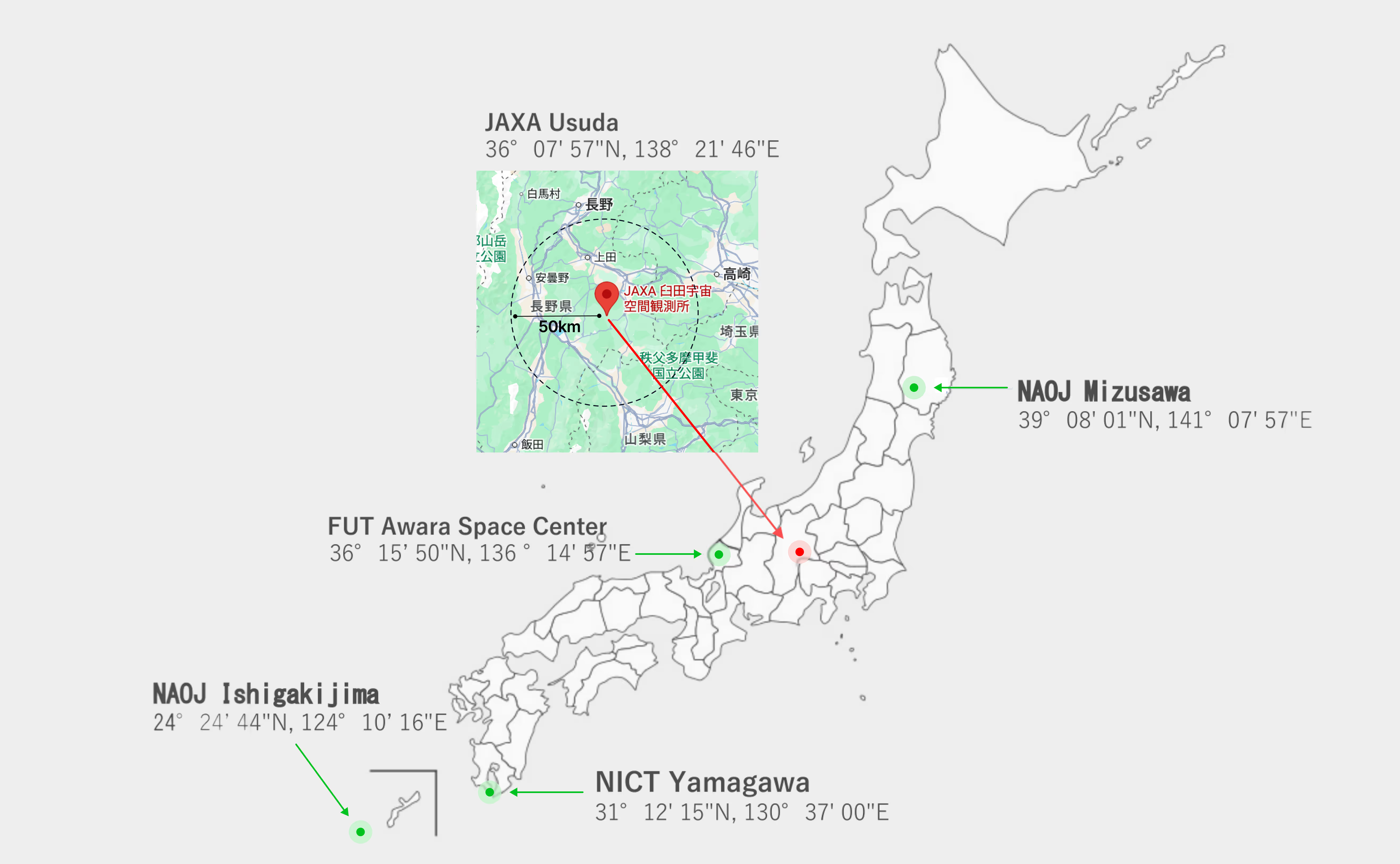
Satellite terminals (including capable smartphones) emit radio waves to transmit signals to geostationary satellites approximately 36,000 km above the Earth. Restrictions are in place to prevent potential harmful interference with radio astronomy observations in the 1.6 GHz band. Because these observatories listen for faint signals from space, the radio waves emitted by satellite terminals can disrupt their scientific work.
The agreement covers five specific locations:
No. The operational agreement and the 1.6GHz band restrictions apply to all portable mobile earth stations regardless of the specific communication service provider. The rules for coordination with the NAOJ remain consistent across the country.
The device must be powered off. When a terminal is powered on, it may automatically emit radio waves to sync with the satellite network, which can interfere with astronomical observations even if a connection is not actively being made.
No. Under standard conditions, transmissions within the restricted zone are prohibited. Post-use notification is only a mechanism for reporting emergency use after it has occurred; it does not grant prior permission for routine operations in protected areas.
As a general rule, the terminal cannot be used within the 50 km separation distance of the JAXA Usuda Radio Space Observatory. Restrictions are waived in the following exceptional circumstances:
Reach out to [email protected] for further clarification.
Our team is available to help clarify any aspects of the operational restrictions or provide additional technical guidance.

.svg)


